Click on the link below to read a recent article on what I consider to be a totally blush-worthy, but incredible art form: the traditional calypso. The article lists ten popular calypsos by some of the music's most popular artists (past and present).
When I first moved to the Caribbean, I would go to calypso shows (especially the Tents and Calypso Revues during Carnival), and everyone would be breaking up laughing and having a ball, and unless I was with someone willing to explain what was being said, the accents defeated my ability to understand exactly what the songs were about. Talk about frustration!! It took a while (I won't say how long), for me to be able to break it all down to the point that I was laughing and really enjoying along with everyone else. Sweet relief.
With that in mind, I wrote the article and added the videos, so that people like me (not native born islanders), would actually get it, and could truly understand and enjoy the cleverness (especially of the double entendre) inherent in traditional calypso. Enjoy!
http://www.hubpages.com/entertainment/10 of the naughtiest double entendre calypsos ever-written
Sunday, February 16, 2020

Thursday, May 30, 2013
Kenny Chesney's 'Life on a Rock' Tickles my Soul
Kenny Chesney has had a long association with the Virgin Islands. His album 'Life on a Rock' is a touching salute to his experiences there. His commentary on the following video says what he feels much better than I could:
St. Thomas' nickname is actually "The Rock" because all of the Virgin Islands is essentially rock formation that was formed during volcanic eruptions eons ago. What is above water today was once, for the most part, on the bottom of the ocean. That's why, particularly on St. Thomas it is difficult to grow food ... you won't go too far beneath surface soil before you hit rock.
When Kenny makes the statement about craving that way of life ... my heart totally responds. It is difficult for many people to understand that desire, that need for a simplistic lifestyle, natural beauty and acceptance based not on what you do, but just on a human level. To say it sooths the soul, is an understatement.
In 'When I See a Bar' he said: "This song defines a time when I first started going to the Virgin Islands, and I had a group of people I became great friends with. They didn't know what I did, or they knew and didn't care." That just says it all.
When I think back to my Virgin Island days, I see myself sitting on the beach looking out at that blue-green water, and experiencing such peace. My entire time there was a healing experience; not from any particular thing, just from life itself. Somehow I think Kenny is feeling me on that.
St. Thomas' nickname is actually "The Rock" because all of the Virgin Islands is essentially rock formation that was formed during volcanic eruptions eons ago. What is above water today was once, for the most part, on the bottom of the ocean. That's why, particularly on St. Thomas it is difficult to grow food ... you won't go too far beneath surface soil before you hit rock.
When Kenny makes the statement about craving that way of life ... my heart totally responds. It is difficult for many people to understand that desire, that need for a simplistic lifestyle, natural beauty and acceptance based not on what you do, but just on a human level. To say it sooths the soul, is an understatement.
In 'When I See a Bar' he said: "This song defines a time when I first started going to the Virgin Islands, and I had a group of people I became great friends with. They didn't know what I did, or they knew and didn't care." That just says it all.
When I think back to my Virgin Island days, I see myself sitting on the beach looking out at that blue-green water, and experiencing such peace. My entire time there was a healing experience; not from any particular thing, just from life itself. Somehow I think Kenny is feeling me on that.
Tuesday, April 2, 2013
ALISON HINDS AND SQUARE ONE: ABSOLUTE MUSIC ROYALTY
Hi everyone,
Although my heart has been present, I have been absent from the blog-writing process for some time now. There are many reasons for my MIA status, the most important being that I couldn't log on to my blog. I know it sounds silly, but for some mysterious reason, I couldn't log in, and when I tried to reset my password, it simply didn't work because the email to reset was being sent to an old email account that no longer exists. All of this happened at a time when I had MANY other challenges in my life, and decided that signing on to this blog was something that could wait. Well, the wait lasted much longer than intended, but I am back. Can't say the situation is straightened out because it isn't, but I'm working on it. I could disappear again. If so, I will start a new blog, and give up on this one.

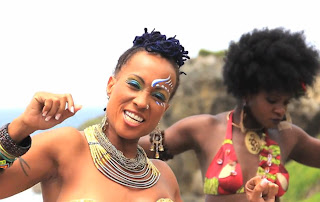

The center photo is a 1998 hit that was revived for 2011 Carnival: "Alison Hinds - Faluma/Makelele" (official music video) Check it out on YouTube.
Alison Hinds is not only the 'Queen of Soca', but is true Caribbean music royalty. I understand that she has formed another group, so maybe the old days are really just that. I am just so happy I had the experience of seeing Alison and Square One in person. I was front and center for their performance that night, and I still remember it as if it was yesterday.
Although my heart has been present, I have been absent from the blog-writing process for some time now. There are many reasons for my MIA status, the most important being that I couldn't log on to my blog. I know it sounds silly, but for some mysterious reason, I couldn't log in, and when I tried to reset my password, it simply didn't work because the email to reset was being sent to an old email account that no longer exists. All of this happened at a time when I had MANY other challenges in my life, and decided that signing on to this blog was something that could wait. Well, the wait lasted much longer than intended, but I am back. Can't say the situation is straightened out because it isn't, but I'm working on it. I could disappear again. If so, I will start a new blog, and give up on this one.


The center photo is a 1998 hit that was revived for 2011 Carnival: "Alison Hinds - Faluma/Makelele" (official music video) Check it out on YouTube.
Alison Hinds is not only the 'Queen of Soca', but is true Caribbean music royalty. I understand that she has formed another group, so maybe the old days are really just that. I am just so happy I had the experience of seeing Alison and Square One in person. I was front and center for their performance that night, and I still remember it as if it was yesterday.
Monday, April 12, 2010
IT'S CARNIVAL AGAIN!


Oh my, it's Carnival time again in St. Thomas. Cannot believe a year has passed since the last celebration. And, yes I'm missing it again. The only good thing I can say about that is ... I have enough memories of the ten years of Carnival I enjoyed to last me a life time.
The theme this year is: BACCHANAL AGAIN FOR 2010!
If you're comtemplating visiting the island during this fun time, peruse the Carnival Committee's website www.vicarnival.com to see upcoming events and which ones you might like to attend.
Also see some of my blogs on Carnival (linked on this page). Some of my favorites are:
"A J'ouvert Story"
"It's Carnival in St. Thomas: Five Fun, Exciting, Don't Miss Carnival Events".
"Rain Don't Stop the Carnival"
and ... oh, you get the idea.
If you find yourself in St. Thomas before Carnival ends on May 1, have a Rum Punch for me!

Sunday, January 24, 2010
Excerpts from the Novel "The Secret of the Veil"
At a recent book signing, I read the opening of Book 3 of my novel, "The Secret of the Veil". Although the novel is a work of fiction, I often employ areas of my own personal experience, especially in description, as a part of the storytelling process. That's exactly what I did in this novel.

After reading the opening of that section, I thought ... Although attributed to the heroine of the story, what a perfect and honest account of my first impression of St. Thomas; an impression that I should perhaps share here on my blog.
So, below are selected excerpts from Book 3 of "The Secret of the Veil".

After reading the opening of that section, I thought ... Although attributed to the heroine of the story, what a perfect and honest account of my first impression of St. Thomas; an impression that I should perhaps share here on my blog.
So, below are selected excerpts from Book 3 of "The Secret of the Veil".
From pages 291-292:You can read more about the "The Secret of the Veil" on my website, www.claudettejones.com.
From the sky the ocean was a deep, mystical blue, but when the shoreline came into view before landing on St. Thomas, the water turned a translucent and beautiful shade of deep turquoise.
When the airplane landed and I walked down the steps into the bright sun, the heat hit me like a solid wall. For a few moments, I felt like I was suffocating and frantically wondered what I was doing on this island. Gratefully the trade wind breezes I had heard so much about kicked in and cooled me down some.
When I reached the ground, I stopped and stood staring at Sammy's hills; green slopes checkered with colorful houses. As people brushed past, I continued to stand transfixed by an eerie sense of familiarity with a place I had never seen and only recently had heard about. I had an odd feeling of inevitability combined with a peculiar sense of homecoming.
Of the four major islands in the Virgin Islands chain of St. Croix, St. Thomas, St. John and Water Island, I had chosen St. Thomas because it was where Sammy had lived. I hadn't a doubt it was the right choice.
From page 293:
On the drive from the airport, we passed the harbor in Charlotte Amalia and it was pure majesty. Cruise ships lined up at the dock across the bay had disgorged hundreds of passengers who filled the streets and the colorful shops to overflowing.
Once through town we were driving up and down hills so steep, I was lighheaded and breathless, and more than a little bit afraid, but pretended not to be.
Friday, January 15, 2010
Haitians Still Amazingly Calm Despite Unimaginable Circumstances
You would practically have to live on another planet not to know about Haiti's horrific tragedy this past Tuesday. A 7.0 earthquake that has resulted in a tragedy of epic proportions.
Sadly, living on an island seems to magnify everything; both good and bad events, circumstances, situations. I guess it's because islands are compressed, compact societies where it is often impossible to remove yourself in the event things get antzy. Everything is absolutely up close and personal, and you can't always get away from it even when you want to.
You can't just fill up the tank, catch a Greyhound, or even put on your walking shoes and leave everything behind. No, it takes forethought, planning and most important ... possibility. In short, in certain circumstances, you might just find yourself STUCK in place. Certain circumstances like disasters such as hurricanes and yes, earthquakes.
My heart goes out to the people of Haiti. How well I can relate to those (even the able-bodied), who are helpless in the present situation. I am a survivor of Hurricane Marilyn that hit the Virgin Islands in '95. To be completely dependent on the goodwill of others for your well-being is to say the least, frightening.
For instance, I can't imagine being in the tropics for several days without water. Even if uninjured, how do you exist in 90 degree heat without water for that period of time? I couldn't. And, the media is now making an issue about some of the people becoming violent. Who wouldn't? They don't have access to communications and have no idea when and where help is coming from.
The plight of these helpless people is heart-wrenching.
Right now, the only thing most of us can do to help them is to contribute money and to pray. Let's all do lots of both.
Sadly, living on an island seems to magnify everything; both good and bad events, circumstances, situations. I guess it's because islands are compressed, compact societies where it is often impossible to remove yourself in the event things get antzy. Everything is absolutely up close and personal, and you can't always get away from it even when you want to.
You can't just fill up the tank, catch a Greyhound, or even put on your walking shoes and leave everything behind. No, it takes forethought, planning and most important ... possibility. In short, in certain circumstances, you might just find yourself STUCK in place. Certain circumstances like disasters such as hurricanes and yes, earthquakes.
My heart goes out to the people of Haiti. How well I can relate to those (even the able-bodied), who are helpless in the present situation. I am a survivor of Hurricane Marilyn that hit the Virgin Islands in '95. To be completely dependent on the goodwill of others for your well-being is to say the least, frightening.
For instance, I can't imagine being in the tropics for several days without water. Even if uninjured, how do you exist in 90 degree heat without water for that period of time? I couldn't. And, the media is now making an issue about some of the people becoming violent. Who wouldn't? They don't have access to communications and have no idea when and where help is coming from.
The plight of these helpless people is heart-wrenching.
Right now, the only thing most of us can do to help them is to contribute money and to pray. Let's all do lots of both.
Friday, August 28, 2009
Vacationing in the Caribbean During Hurricane Season
One of my readers emailed me about the possibility of a hurricane during her vacation. She didn't know this was hurricane season and had planned a trip to St. Thomas right in the middle of the season.
Unfortunately many travel professionals are often tight-lipped about hurricane season to travelers heading into those destinations.
After all, if you knew a hurricane was possible during the time and at the place of your vacation, you'd probably think twice about going there.
Now, there's good news and bad news about making the decision to vacation or not vacation in such an area at such a time.
THE GOOD NEWS
I would go ahead with travel plans unless a hurricane is currently on the way to your vacation destination. If so, don't go. Or, at least wait until it passes, or until you have more information about it.
If nothing is on the way, then take a chance and go. You definitely get the best bargains during hurricane season. So, go ahead. Take advantage.
THE BAD NEWS
Once a hurricane is reported to definitely be heading to your vacation destination, (particularly to a Caribbean island), airline seats off island will disappear faster than a cold beer on a hot day. Not only will vacationers change their exit dates, but residents of the island will be buying up those seats as well.
If you're already at your vacation destination, and you learn a hurricane is on the way, pay attention to what's being said by local authorities. When they say, it will probably hit your location, immediately call the airline and change your return date. By the time it's definite the hurricane will hit, it's usually too late to leave the island by air. Seats are gone.
While living in St. Thomas, I stayed up one night for the 5am weather report, which was going to have more info on the approaching hurricane. By that report, they would know and be able to tell the public if the hit was definite. When the report came on, it was a sure thing that the storm would hit St. Thomas.
I called the airline immediately. No seats available. Every seat on every airplane leaving the island was gone.
Before the storm hits, all the airlines fly their airplanes off the island and are gone until such time as the storm is over.
So, bottom line, I would definitely go ahead with any plans made to travel to the Caribbean, or anywhere hurricanes are a fact of life. I would, however be very aware of the weather and weather reports, and be ready to act quickly in the event something blows up.
Unfortunately many travel professionals are often tight-lipped about hurricane season to travelers heading into those destinations.
After all, if you knew a hurricane was possible during the time and at the place of your vacation, you'd probably think twice about going there.
Now, there's good news and bad news about making the decision to vacation or not vacation in such an area at such a time.
THE GOOD NEWS
I would go ahead with travel plans unless a hurricane is currently on the way to your vacation destination. If so, don't go. Or, at least wait until it passes, or until you have more information about it.
If nothing is on the way, then take a chance and go. You definitely get the best bargains during hurricane season. So, go ahead. Take advantage.
THE BAD NEWS
Once a hurricane is reported to definitely be heading to your vacation destination, (particularly to a Caribbean island), airline seats off island will disappear faster than a cold beer on a hot day. Not only will vacationers change their exit dates, but residents of the island will be buying up those seats as well.
If you're already at your vacation destination, and you learn a hurricane is on the way, pay attention to what's being said by local authorities. When they say, it will probably hit your location, immediately call the airline and change your return date. By the time it's definite the hurricane will hit, it's usually too late to leave the island by air. Seats are gone.
While living in St. Thomas, I stayed up one night for the 5am weather report, which was going to have more info on the approaching hurricane. By that report, they would know and be able to tell the public if the hit was definite. When the report came on, it was a sure thing that the storm would hit St. Thomas.
I called the airline immediately. No seats available. Every seat on every airplane leaving the island was gone.
Before the storm hits, all the airlines fly their airplanes off the island and are gone until such time as the storm is over.
So, bottom line, I would definitely go ahead with any plans made to travel to the Caribbean, or anywhere hurricanes are a fact of life. I would, however be very aware of the weather and weather reports, and be ready to act quickly in the event something blows up.
Subscribe to:
Posts (Atom)
